
By Chinmay Khare
There was a strong odour of the lingering smell of bleach, which clashed unpleasantly with the suspended scent of grief that clung to the air like a pall.
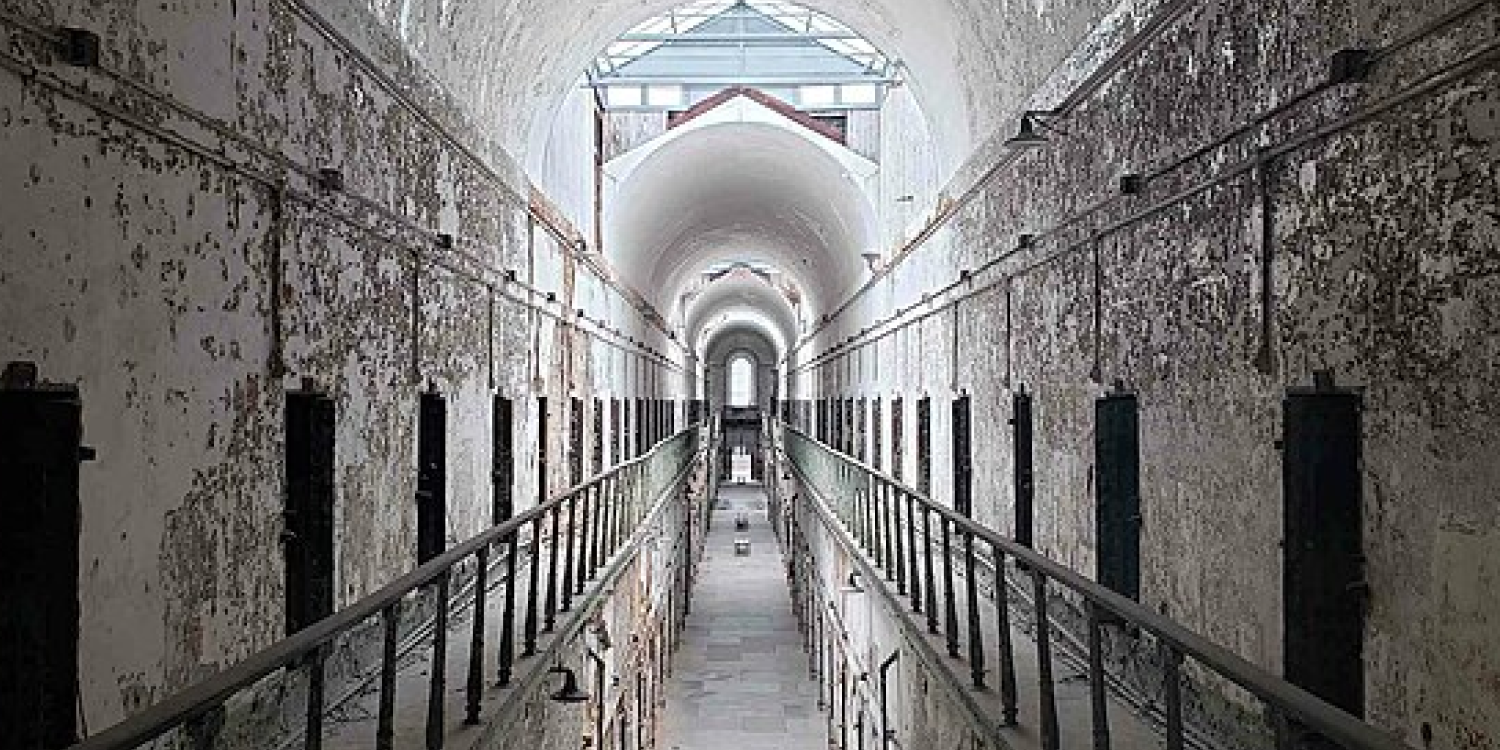
Maya Torres entered the doorway of what was once the dark corner of Block D, her boots making a quiet thud on the new bamboo floor that shone like chrome in the sunlight pouring in through floor-to-ceiling glass windows, light years from the dark slit windows of her past. The yellow walls, a sunflower hue that had been hailed by the design committee as a “trauma-informed colour,” were a weak try at covering up the deep scars that still lingered in the building’s memory. Maya had yielded then, thankful that someone had taken the effort to cover up the darkness, even if it was like applying Band-Aids to an earthquake.
This was the new Healing Archive, a site of memory, a site of reckoning, and refuge for the act of shared truth-saying that was so desperately needed. The title was grandiose, but for Maya, it was as if she were walking through the bones of her own history.
Numerous years back, this very same edifice had been her enclosure for an astonishing forty-three years.
“Ms. Torres!” A bright voice jolted her out of her daydreaming. Dev, a hyperkinetic bundle of seventeen-year-old energy, his arms quivering with enthusiasm, waved a tablet up and down, his enthusiasm radiating. “We need your signature on the oral history timeline. Three elders are coming in from Stockton, and the virtual lines are already booked!”
Maya glared at him, the sun dashing wildly in her eyes. “You’re talking about the story capture sessions?”
“Ayuh! But I thought we were referring to them as oral histories these days,” he exclaimed, about to burst with enthusiasm.
“Hmmm. Words change too fast nowadays,” she half-mimed.
Dev smiled with a grin whose brightness could ignite joy in even the densest of hearts. “That’s how you know they’re alive!”
Maya could not help but smile back begrudgingly. The boy was smart, a ray of hope, maybe a little too smart. He came here twice a week, taping and writing down the testimonies of those who had survived the cruelty of the prison system or navigated through communities that had been transformed by abolitionist movements. His own brother, Zayn, had gone to a justice circle two years ago, after a fight at school, no police, no expulsion; only witnesses from the community, support networks, and ways to heal.
Zayn was now undergoing vocational training, building a better future for himself. Maya had worked through his case file; it was like reading a book in which hope dared to return.
She signed her name on the tablet and returned it to Dev. “Do you ever wonder what it would have been like with your brother fifty years ago?
Dev nodded gravely. “He’d have been locked up for sure. Possibly juvie first, then prison for the rest of forever.”
“He’s lucky,” she replied, not graciously. “Not everyone gets a second act.”
“Yes, I did,” he replied, a touch of questioning in his tone.
Maya was quiet, her thoughts racing through memories too tangled to articulate.
The auditorium was lined with rows of stacked folding chairs, and every seat was taken by community members dressed in muted colours, a memorialized and respectful event. The auditorium was filled with facilitators, policymakers, survivors, and even wardens, all of whom were stakeholders in the ambitious ‘truth and transition’ process about to build an external narrative.
Her voice trembling at the microphone, her words trapped in her clenched fists, Maya bore the weight of ghosts left behind. Her throat was sore from hours of practice and a restless night of reliving memories.
“My name is Maya Torres,” she started, voice firm but reflective. “I was inside this building when I was nineteen years old. I’m sixty-two now; I’ve been out five years.”
She stood frozen still, letting the hush wrap the crowds. The majority of the eyes were still on her, weighed down with expectation.
“Once,” she swept her hand out, “there were women like me here. Some had been brought because they’d struggled. Some because they were addicts. Some because they were poor and unlucky. The system didn’t care why; it needed bodies, and it got them, seemingly untouched by what had been.”
The air stung in her lungs; memories scratched at her throat.
“When abolition arrived, it was a miracle. Miracles do not feed you when you are hungry, and the prison gates do not heal the wounds in the heart. They do not restore lost birthdays, lost years, or lost moments of life.”
The room was quiet.
“Don’t get it mixed up,” she went on, her determination hardening. “I believe in what we’ve accomplished. The circles of conflict, the healing councils, and the investment in care. It’s something greater than I ever hoped to witness in my lifetime. But healing is not a system. It’s a choice, a sacred vow, a burden we choose to bear.”
The first clap shattered the silence, and the rest came in a cascade effect. There was applause all around her, and a wave of gratitude and empathy.
Stepping back, her heart thumped, the thud echoing in her head.
Outside, later, the crisp night air, thick with the smell of lemon from the lemon trees on the top floor, was a relief. Maya trailed Dev to a bench constructed of recycled cell doors. He wavered, tugging at the bottom of his shirt.
“Did I do something wrong?” he inquired in a frowning manner.
“No, child. You’re doing just fine,” she reassured him.
He gazed at her sideways. “May I ask something silly?”
“As long as you are not averse to a sharp retort,” she said.
“Do you ever wish that it had all just been wiped out? Like the prisons, the records, all of it. Wiped out. Like it never existed.
Maya gazed up at the stars, whose light was not contaminated by the light pollution of industrialized skies.
“Sometimes,” she replied slowly. “But then I think about how we arrived. Folks forgot that punishment isn’t justice, that cages don’t keep out pain. If we forget again, we’ll just build them again, maybe with a prettier face or a softer sound, but they’ll be cages.”
Dev sat quietly, tasting her words, letting herself sink into the gravity of her experience.
“Remember,” Maya whispered. “You ask hard questions. That’s the work now.” He inclined his head, very slowly, a realization creeping into his eyes. They sat there in a cocoon of darkness, the world outside shrouded in a quiet calm. The prison was gone, yet the hurt lingered. But in that complex pattern of hurt, so too did they endure. And in that, Maya hoped, was an ember of hope, a delicate yet vital beginning.
Leave a Reply