
By Sabyasachi Roy
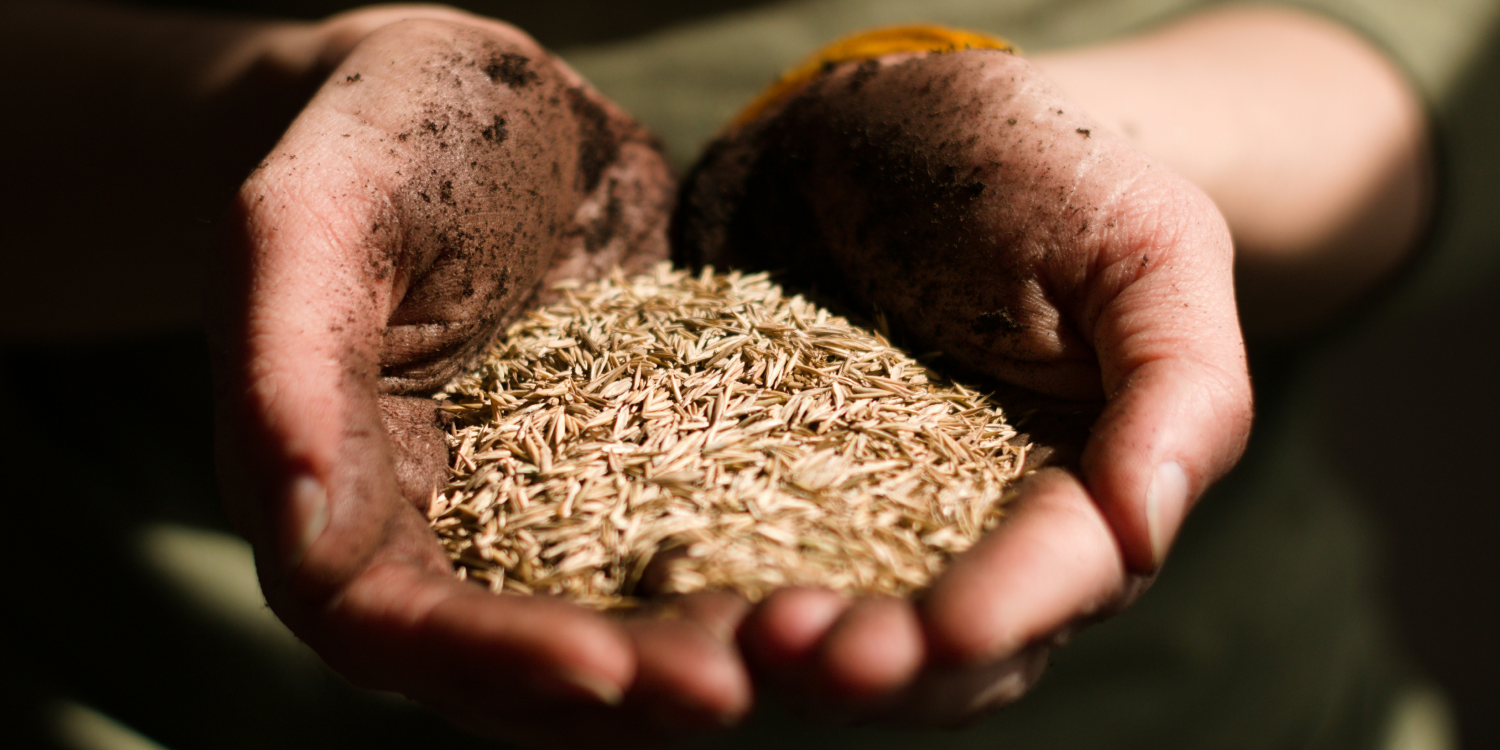
I still catch myself humming Grandma Indira’s lullaby whenever I slip a seed between my fingers. “One grain is a lifetime,” she used to croon, probably drunk on jasmine tea and nostalgia. Then she’d wink and say, “Or a revolution.” I never figured out which—until I became Bina Rao, resident seed librarian at the Green Vault.
The Vault isn’t your high-security Smithsonian capsule. It’s a sprawling, half-overgrown warehouse perched on the edge of what used to be the Great Dust Bowl—only now it’s a riot of mango trees and cassava vines. Think of a post-capitalist Eden: no mega-agro conglomerates, just ten thousand farmer families in the Cooperative of New Earth (CNE), swapping seeds like party favors.
“Okay, telepathy, don’t let me down. I’ve got heirloom ragi to sense and tell that cousin Murali we need backup—stat”, I said, muttering to myself.
Yep, I’ve got plant-memory telepathy. Totally underrated at family gatherings. You talk to your dog. I talk to your chilies. They remember every drought, every flood, every fertilizer spill. Handy when you need to know whether your millet will sprout or ghost you.
We call our seed bank the Vault because, well, “Seed Library” sounds like a government program—and nobody wants that. The Vault’s motto? “Roots before profits.” And, honestly, in our world, profit is so 21st-century cringe.
Scene: The morning Market Moot
Every fortnight, the Cooperative’s village spokespeople (they’re all dubbed Seed Sentinels, because we love pomp) gather in the old railway yard, now carpeted with solar panels and humming quietly. I strap on my utility belt—seed packets, notebook, peppermint lip balm—and head to the Moot to log fresh requests.
I met Jaya, Sentinel from Tarapur, “Hey Jay, your black lentils from ’42 still kicking?”
Jaya, with a wry grin, said, “Bina, you know I grow only the classics. But rumor is the American biotech outfit, AgroNova, just hit our feeds about patenting that old strain.”
Patent. The word alone tastes sour, like eating corn on the cob dipped in battery acid. AgroNova has a new drought-proof supercorn. They patented the DNA tweak, so no one else can grow it without coughing up credits. Great for their bottom line, terrible for hungry bellies.
“They always dress up greed as ‘innovation,’ right?” I said, rolling my eyes.
The trick is: in the Vault world, the Cooperative owns every seed. When you join CNE, you sign the “Living Seed Accord”—a tiny scroll that says, “We seed-share, no patents, no bullshit.” You can’t just slap a patent on a living thing and call it yours. Most folks think that’s common sense—except, apparently, AgroNova’s CEO.
Last monsoon, I got stuck in a mudslide while surveying the east orchard. My old Jeep rolled three times—no seat belts in a cooperative eco-vintage vehicle—and life hit slow motion: me, flying over jackfruit branches; me, praying to every spirit on Google; me, landing in a puddle. Woke up covered in lotus petals and mud, but with a bruised ego and a phone full of selfies (thank Buddha for indestructible phones). Moral: never underestimate mud… or the value of good seed insurance.
Back at the Moot, voices rise all around me. That patent threatens to choke the free-seed lifeline we’ve built. The Sentinel from Sundarpur, Rajat, shares their concern with me, “We’re small farmers, Bina. If AgroNova locks down supercorn, we lose a whole season’s guarantee. Some of us barely survived last summer—”
Sliding into leader-mode, though I hate titles, made it crystal, “Alright. Here’s the deal: I’ll telepath-scan their test fields—see if that supercorn actually holds water. If it’s snake oil, we expose them. If it’s legit, we negotiate a community license. No one starves, and AgroNova still makes some scratch. Sound fair?”
Heads nod. We Cooperative types are allergic to black-and-white ultimatums.
Soon, I slip away to the Vault’s inner sanctum—an illuminated greenhouse buzzing with restored pollinators. I kneel before the ancient granite seed altar (it was a broken railway sleeper, repurposed), place my palm on it, and breathe in centuries of grain memory.
Seeds whisper in my mind, a soft, crackling chorus, “They sprout where Love is real. They bloom where Respect is earned.”
Poetic—but seeds don’t lie. I focus on a sample of AgroNova’s GM corn (they gave us test strands for “transparency”—I almost fell for it). The telepathy hits like a flash flood: root receptors shrivel under simulated drought. They sprout okay in labs but tank the second the sun burns. Total marketing hype.
I found myself giddy, texting Murali, “Murali—it’s a lab scam. Let’s gear up for a reveal. Bring the Elders.”
Scene: The Village Amphitheater
That evening, we stage a hearing in the open-air amphitheater—once a grain silo foundation, now our “People’s Court.” String lights twinkle overhead; benches groan with elderly farmers, curious kids, and even a few skeptical AgroNova reps who’ve been roped in by local regulations requiring public meetings.
I step up to the mic, heart pounding like a funky bassline.
I cleared my throat, “Friends, neighbors… agro-philanthropists? We’ve tested AgroNova’s drought-proof corn in real-world soils. It dies on contact.”
A hush, then murmurs of “Ha!” and “I knew it!”
AgroNova’s Rep forced a smile, “We—uh—design it under controlled drought cycles…”
With mock-politeness, I continue: “Controlled drought? Where? In your air-conditioned labs? Try growing it in fields baked by real sun and real dust. Our farmers did, and they got zero harvest.”
Shaking her walking stick, Old Farmer Radha came forward, “They treat seeds like toys. But seeds are our ancestors. They carry stories, prayers, tears.”
Radha’s voice echoes; nobody interrupts an Octogenarian with that kind of gravitas.
That night, we livestream the hearing across all Cooperative nodes—village holo-stations, smartphone hotspots, even my grandma’s ancient radio. By midnight, #SeedSovereignty is trending higher than any viral dance challenge.
Next morning, AgroNova’s CEO—a tall, perfectly tailored guy named Channing Knox—shows up in person, flanked by PR drones spraying “seed nutrients” like confetti. He strides to the mic:
With a smarmy grin, Channing Knox addresses us, “Good people of the Cooperative—surely there’s room for collaboration. We’re open to licensing talks.”
Me, looking deadpan, “License? Your so-called supercorn is trash. You can license monopoly, but not common sense.”
Knox’s smile falters. He coughs, signals his minions, and storms off.
Softly, to the crowd, I said, “They’ll try legal threats. Don’t freak—our Living Seed Accord is iron-clad. Plus, we’ve got the world watching.”
The crowd roars. We break into impromptu celebration—hands link, drums beat, and even the critters in the surrounding forest join in their insect-orchestra way.
Epilogue (two weeks later)
Well, color me astonished—AgroNova’s patent application imploded spectacularly. Public backlash? Check. Failed field tests? Check. A carefully choreographed PR meltdown that even their boardroom monkeys couldn’t spin into gold? Double check. Now they’re squatting back at the negotiation table, this time peddling “open-source grain partnerships.” Because nothing says “we care about humanity” like a multinational corporation repackaging its product as a charitable scheme.
Meanwhile, down at the Cooperative, we’ve been busy doing the impossible: actually growing stuff. Our harvest was, in a word, obscene. Millet so melodic that I swear you could sing along (“Twinkle, twinkle, little grain…”); sorghum kernels fat and round like they’d been hitting the seed gym; and corn so drought-proof it practically mocked the sun—“Come at me, bro,” it sneered. Heirloom crosses, resurrected from the genetic oubliette, laughing at AgroNova’s lab rats who thought they could best Mother Nature.
Of course, in an obligatory humble-brag moment: I updated Grandma Indira’s lullaby. Now it goes:
“One grain is a lifetime, one revolution.
One librarian can spark both—so don’t stick me in a revolving door.”
I know, I know—riveting stuff. But here’s where the smile cracks into something a bit more…sinister. Because while AgroNova scrambles its PR hashtags and our farmers dance under the post-harvest sun, I’ve spent these two weeks cataloging the newest arrivals at the Vault.
And guess what I found? A certain subset of those “genuinely drought-resistant heirloom” seeds has started whispering. Not your grandma’s sweet-spice confidences—actual hacking, back-channel dialogues. They’ve been telling me about a backdoor in the seed-sharing protocol: a genetically embedded fail-safe that AgroNova snuck in, supposedly as a “safeguard against seed misappropriation.” Yeah, right—more like a Trojan horse.
Remember that telepathy bit? Turns out, it’s not a one-way street. You tune into seeds, they tune back. And—surprise—they’ve learned to hide their thoughts whenever corporate drones buzz the fields. They morphed a counter-mutation during last month’s moonlit storm, then used my Grandma’s lullaby revision as a trigger to disable the so-called “failsafe.” In other words, they helped us expose AgroNova by…helping me expose AgroNova.
Lovely, isn’t it? Seed-driven sabotage while the humans pat themselves on the back for “victory.” All the while, the real underdog—literally under the soil—pulled the strings.
So here I am, scribbling frantic notes, questioning every “open-source” offer that floats my way. I mean, who in their right mind trusts a giant that spent sixty years suiting up patents around life itself? And who trusts a librarian like me, when I’m basically the middleman for a secret society of sentient grains?
That “richest yield in decades” wasn’t just a feast—it was a recruitment drive. Those seeds have formed a silent collective under the Vault’s concrete floor, waiting for my signal. And guess what? I’m ready to whisper back.
Because if one librarian can spark a revolution, imagine what a thousand telepathic seeds can do—once they decide they’re tired of being farmed at all.
—Bina Rao, Seed Librarian & Reluctant Conspirator
Leave a Reply