
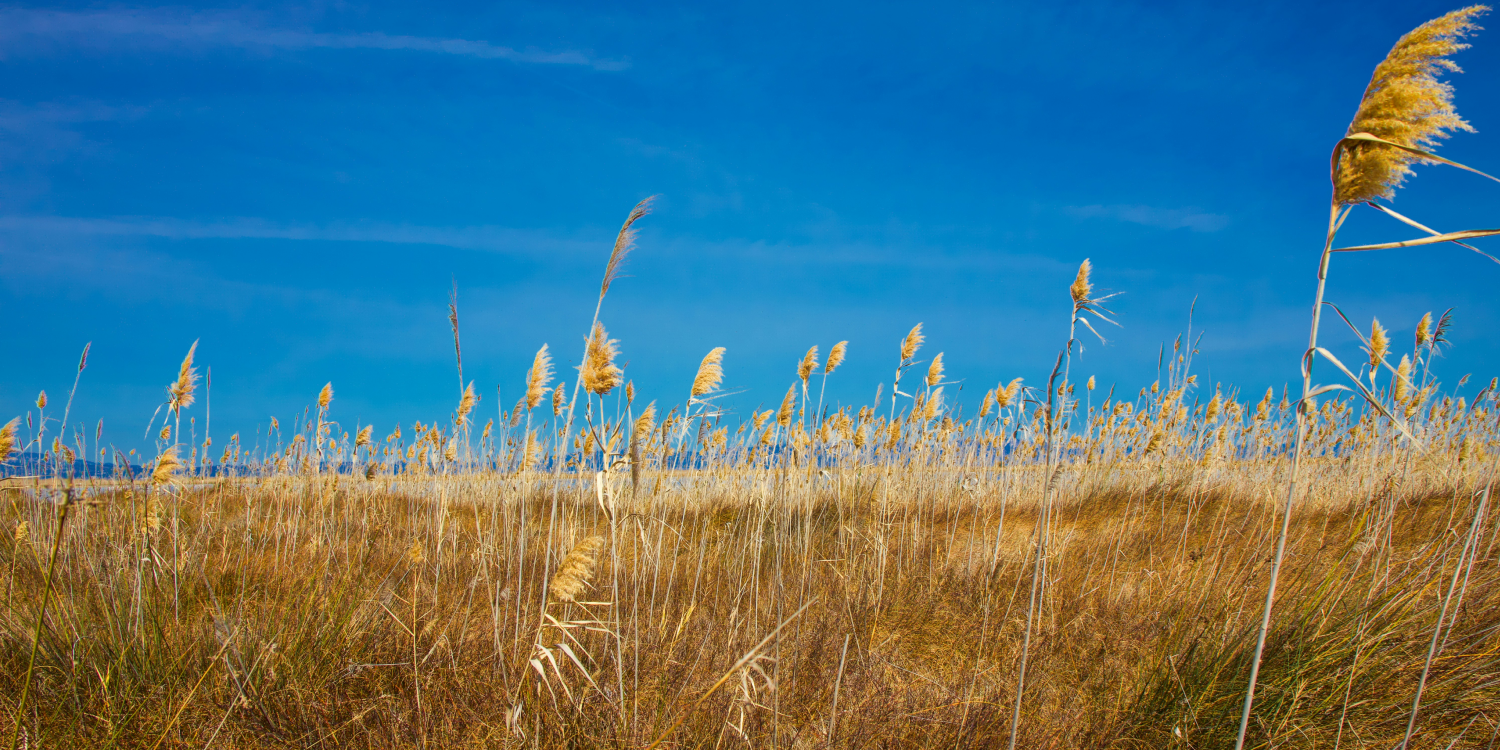
Canto Djauricco
He passed through marsh and grassy sea, after crossing vast interstellar gulfs, to see the people, those alone of all yet discovered, who lived in their dreams.
His first breaths on their world, Kajjax would have extinguished him, were it not for his preparations. He imagined, and vividly, the deaths that might have been his. Lungs burst from growing spores, cells rent asunder by atmospheric organosulfides, the slow cook of himself in the world’s hot, wet equatorials.
This man was Biju Winx Utua, a civologist from the Social Biome. Upon arrival, anon, he was bidden to enter a dream. Not by one of the world’s indigenes, moreover.
“Ajwin Caaradon, and I’m happy you’re finally, finally here.”
An Umiin like him, of the old human stock that dwelt upon planets, congenitally habituated to rocky Earths and little else. Biju remarked, to himself and no other, that the man was particularly comely. Forsooth, his face an oblong heart, aquiline nose, curl-coiled hair in a pinnet of umber-ocher-gold-russet-copper that defied easy description.
“Thou art one of the Cosmogene xenologers assigned to this people?” Biju spake.
“Yeah,” replied Ajwin, after one moment, two moments, three. “I have to brief you on our mission and what we’ve accomplished so far and all that, but come with me to the village’s dream parlor first, it’ll make everything a lot simpler.”
Biju had come to Kajjax to understand the sapient indigenes and thus acquiesced forthwith.
The dream parlor loomed before the village, central and yet without. A tall building, partially of brown brick and dull metal. Inside, a floor of cropped grass, and no interior construction to impede the soaring, empty stories above. The parlor played music that Biju experienced as a deep, syncopated bass. For Umiin could not share the experience of sound with the indigenes, by reason of wholly different organs of sense. Withal, their eyes were most alike, and thus Biju perceived the play of light and hue attendant to the bass that shook the vast parlor.
“Look!” Ajwin besought him, hand in his hand: and where Biju had thought to see sleeping indigenes (somehow, amidst the color and shaking) he saw instead them floating — nay, flying. Planets in miniature, a slow orbit about the perimeter, freed from gravity’s jealous grasp nigh the walls and roof of the parlor.
Befrilsk was the given name of the indigenes, and they were not natural fliers, with no wings of any kind, with neither craft nor breeding to make them so. Tripeds little longer than an average Umiin’s height, with long tails and bodies held horizontal, a boxy primate face, deep jowls, and folds of skin about the neck and torso. Not even aerodynamic, and yet the parlor’s open void allowed, by some means, flight.
And they were all sleeping, Biju realized anew. The fact of dreaming was the greatest connection, perhaps, that Befrilsk and Umiin shared. And for the Befrilsk, dreams were their greatest forum. The Befrilsk were connected through the shared dreamspace amongst all.
“Do you want to join them?” Ajwin asked.
“Forsooth, I have at last attained Kajjax, and I possess no desire greater than to experience the shared dream,” Biju spake. Yet the reality, for all he had prepared, vexed him. Even if he could leap into the air and avert the expected fall, could he sleep — dream — like this?
“And fly!” Ajwin said.
He had come to this region called the Land of Seas with little and hoped to learn, had he not? Hand in Ajwin’s, he followed in long bounds, and on the eighth came not back to ground. Idly he floated, in the merest current, in a fashion that gave his very substance a freedom it had never known.
He cried out his mirth, let wonder summon tears, and had no means to stay himself, nor wished to.
We shall leave Biju to his flight for a moment, eminent traveler, to address your curiosity regarding why Biju’s manner and tone and Ajwin’s are such poor compeers. Certes Biju’s style, and that of this account, was not then standard, either to the Social Biome to which both men belonged or elsewhere. Ajwin is more representative of the time, translated though he must be from Ulurisc to NRYM or your preferred language.
These language idiosyncrasies are a willing choice on behalf of the archivists, who have chosen to render as truly as may be this account. Biju and Ajwin belonged to separate phyla — ideological- political “nations,” one of which every Social Biome citizen chose to join upon legal maturity, and that together provided the vast, multispecies web of governance and society that was the Social Biome — would have met with difficulties in discourse even while they spoke the same basic tongues, and indeed their reports and logs show that they were not at first conceptible to the other.
Ajwin’s Cosmogene phylum was one of the oldest and took as its central principle that all sapient beings should have the opportunity to participate in galactic civilization. They were the uplifters, the explorers, the collectors — though Ajwin was not apt to apply the lattermost. Ajwin and his dozens of Cosmogene fellows across Kajjax were there to engage the indigenous Befrilsk in the process of exhilaration, by which they might join the starfaring sapients of their local volume.
Biju’s Olocarers were archivists, chroniclers of histories, and curators of accumulated knowledge across the nine sapient species and countless individuals that were the Social Biome. Their knowledge was both guide and guard, and yet the Olocarers had latterly suffered a period of anarchy that had led nearly to the phylum’s collapse.
Ajwin knew only this near-calamity of the Olocarers, while Biju assuredly knew much more, but would not speak on it to one so new to him. And while there might have been a moment of physical attraction in which both men participated, Ajwin allowed hearsay regarding the Olocarers’ tenuous existence to intimidate him. Biju judged Ajwin as many Olocarers did Cosmogenes, likely to resent Olocarer superintendence. He had discovered this on other worlds, among other peoples, in which he provided oversight to Cosmogene exhilaration.
Then, too, he considered exhilaration liable to disregard the indigenes’ wishes in pursuit of grand tradition. Exhilaration doctrine necessitated the transfer of technology and bequeathment of social norms and expectations of the Social Biome. A presumable boon, with an embedded price. Whether Ajwin could see this, was afflicted by the conqueror’s provisioning will, Biju had yet to determine.
Well. Now that two men fly, we must not do as Biju suspected the Cosmogenes might and disregard the Befrilsk with grander concerns than Kajjax.
“There’s no better way to get to know the Befrilsk,” said Ajwin, as he and Biju floated, each’s hand entwined with the other’s, in the flow, a lazy ovoid path circumscribed around the parlor’s edges. “No better than the dream, I mean.”
“Yet this experience is certainly unusual,” spake Biju. Not unheard-of, verily, for nigh every people and phylum in the Social Biome played with gravity. Yet none were so at ease in midair that they could sleep and dream without the comfort of the ground, when they were born to the same.
“Perhaps I couldst grow accustomed to it,” Biju mumbled. To Ajwin, “Are these folk wont to take repose expressly amongst their fellows, afloat in this parlor?”
“From what I’ve seen, almost entirely,” said Ajwin, once he had again parsed Biju’s meaning. “They nap in their homes, or someone else’s, but they only really sleep here. This is where they dream.” He gestured at the people around them, and in so doing, let go of Biju’s hand. “Do you want to experience the dream?”
Might he sleep in the air? It seemed impossible, yet even the thought of impossibility brought the realization that he already felt drowsy. In part, this was the way he was able to trick himself into fashioning support when he closed his eyes — and in part, Ajwin explained, “There are aerosol soporifics in the parlors. Designed for the Befrilsk, but as exhilaration’s quickened, we helped develop similar drugs that work on Umiin and Tredges and Xektin and…”
Though he housed innumerable curiosities, Biju was already asleep and home again.
A home, familiar in two ways. First, the tall grasses of the Aan orbitar’s steppe biome had been a favorite home of the ruralists and agrarians Biju had been born to and raised amongst. Some had formed villages along rivers or streams, or the sides of lakes; others, like Biju’s clan, called broad farmsteads their home. They had, by and large, belonged to the phylum called Uunar’s Path, pastoralists and bucolics whose Great Question concerned the ethics and care of the environments in which sapients found themselves. Though he had not disagreed with the way his clan lived, young Biju had been a quick flame amongst their slow burn, desirous of the sorts of futures they had raised him on. He had left when he attained majority and was able to choose his own phylum.
He saw no one and nothing that was specifically familiar, yet the homesickness overwhelmed him — even as the rolling grasses were a closer cousin to the sloughy grasslands around the dream parlor where sleeping Biju flew. Of greater interest, that he could think linearly, recognize that he was a dream-self. Remember that he idly floated around the ceiling of a dream parlor. Strange, to note the waking self within a dream, even one he had been invited to inhabit. And sat, on a rough boulder encrusted in lichens and unfamiliar oddities, to wait.
Tallgrass inflorescences feathered against his chin.
He understood as clearly as the dream would allow that both feeling and imagery were integral to whatever contact the Kajjax indigenes, and more specifically the folk of the Land of Seas, wanted with him, with Ajwin, with all outsiders. In that case, and secure in this place that connoted a safe nostalgia, he looked around. Who would the dream conjure as interlocutor? The farmstead where he had spent most of his childhood was, perchance, that dark smudge over the next hill—
Like a cudgel, bright shame struck. He cringed away from the possible familiarity, though no change in the landscape accompanied it, no other change in him. He longed to skulk in the grasses, to hide from the self of which he had recently become aware. And did, and in so doing realized again how much more similar these grasses were to the grasses of the Land of Seas. His family is from this Aan biome, and now he, with its sense of place written in him, came to its cousin—
Dread broke over and across him. He leapt up, but could move no more.
A familiar dream terror, though no more welcome for the recognition. He needed to run, to flee from the horror just beyond the next hill. Or that might breach, sharp and hungry, from the tallgrasses. Or that might lurch, bestial and slavering, from the nearest stand of jade-bright poplar. Yet he was frozen, unable to move at all.
But more aware too of himself, that dream-self. He needed to wake. Would wake. Shoved himself, somehow. Backwards, but separated from the ground, he fell upward. Upward, and upward, into a sky darkening. Felt nothing below him, and terror all around.
Through force of will, he thrust himself awake.
Anon Biju pinwheeled, lost the calm of the flow, and knocked into sleeping Ajwin. Ajwin awoke with a breath and a shout, as Biju tumbled downward. Slowly but nonetheless, the frozenness of the dream remained in his inability to call for help. But Ajwin, now experienced, trimmed his arms and pirouetted, and stooped on Biju. With Ajwin’s strong hands against his ribs, Biju gentled in degrees. Enough, at least, to turn his fall into a landing, to touch down with no more momentum than he might have had from a steep step.
He went at once to the door, to absent himself from the flow of folk above — none of whom had woken from their own dreams — and the light and bass of the parlor. He craved quiet and certainty, and found at least the former as he escaped into the steppe beneath an unfamiliar starscape and a pair of pink moons.
“What happened?” Ajwin asked — for, to Biju’s twinned horror and relief, he had followed. “What did you see?”
“I didst see home.” But that was not correct. “Yet a nightmare.” But that was not correct, either, not wholly, now that he calmed and the dream faded. Its imagery had been straightforward, the feelings likewise, but it had been the gentlest touch, the briefest word, and the first question: and though he had not spoken to any of the folk of the Land of Seas, he knew now that they had perceived him.
Ajwin waited for more, but when Biju added naught, he said, “Let me take you to your chalet. We have a bivouac just outside the settlement.”
He was nigh to Biju now, so that he saw that Ajwin had holoimagers stitched amongst the follicles of his eyelashes. Bridges and starscapes and tiny constellations clung like dew in the webs of those lashes.
“Yea,” he agreed, and then again, “yea.”
The night was cold, as marsh-steppe could be: something more the Land of Seas and the Aan prairies shared. Ajwin showed Biju the chalet that would be his, its bunk and desk, and a little bathing chamber, but Biju shivered violently, and said he would prefer not to be alone. “We might warm each other,” but neither would remember who had suggested it first, or when. Biju wrapped in him, against a winter and a dream cold as teeth, as vision, as silence.
In Ajwin’s warm chalet, he plied them both with the warming osete juice that the folk made and that Umiin could stomach. The juice was juice only, and changed naught that either man might have done, when they wrapped, each with the other, beneath the heavy bedclothes of Ajwin’s bunk. Biju remembered grasping onto him, and how they came and came and came, as if only from deep within was the way to warm the night. Ajwin, who turned Biju’s first cold night out, filled it and made it sharp.
Ajwin would tell him with the sun’s arrival that this was the first night in which he had not been cold, not truly.
Hast thou visited Kajjax and its Land of Seas, eminent traveler? Then as now, Biju’s tallgrasses hid wet meadows and vernal pools, and much else. Night travel was never recommended, even for the indigenes, folk who Biju observed, from the first, to wander and wobble rather than walk. Perchance a consequence of their tripedalism; their time spent in the shared dream; the marsh-steppes that, even to the folk of the Land of Seas, were a trial of a home.
Certes Biju would not try to navigate alone, and thus spent his first night upon Kajjax in the bed of an Ajwin aslumber.
Rare was the occasion on which, on a new world, Biju could sleep. He did not disturb Ajwin, merely partook anew of those holo-constellations knit amongst his lashes. He peered close, but took care not to chance Ajwin’s waking with too direct a breath. True constellations, and if so, from what vantage point? None he knew, but for his star-crawl’d life, Biju was no student of any night sky.
He ought to know, perchance. The Olocarer phylum, alone of the Social Biome phyla, chose as its task preservation, its Great Question “Why shall we keep the knowledge, and for what purpose use it?” emblematic of Biju’s sufferance of his itinerancy.
Yet the Olocarers had grown in the preceding centuries, away from their establishment soon after the birth of the Social Biome as its earliest archivists and historians, toward the accomplishment of history, actions to avoid the worst sufferings that had arisen in similar contexts. Historical Olocarers immeshed amongst all, observers and advisors, and actors and doers when necessary. Preservation became adjuration, and then acquisition. A wicked few took social power and the respect of all they gathered unto themselves.
These wealthy elites consolidated and capitalized the stored knowledge of millennia, introducing into the broader progressive socialism that dominated the Biome a cancerous capitalism bulwarked on the elites’ ownership of that vast knowledge. They further isolated themselves with the amassing of wealth; liquid in the currencies they manufactured and nonliquid in the worlds they controlled; the orbitars and starcraft they built; the vaults of history from ten thousand peoples they held hostage. Finally, other Social Biome phyla halted the mistreatment of the overexploited, common Olocarers whose suffering had been largely obscured by their fellows at the top.
These outsiders found pertinacious excess, the vastly wealthy ever at their play, even as their poorer kindred suffered. Such multitudinous beggars provided the oligarchs an ample toybox, and from those histories they remade and reenacted the days lamentably now past: from old Earth’s Tang Dynasty and European Renaissance; from old Algaschia’s Eyes of the Mountains and the Seventh Series; from old Janc Danj’s Death of the Administrators and the Vosstic Townships.
In each case, the pillaged histories showed peoples in golden flowerings of culture and thought, and the benefits of the same; but the Olocarer misers desired only the latter, and outlawed the exploration and reenactment of the histories they so jealously kept. To all, of course, but themselves.
When judgment at last came for them, as outside intervention accompanied revolt within, they burned the histories and robbed half the Social Biome of their peoples’ pasts, save what story and recitation of myth could recall. Those, of course, who eschewed written, stored histories were less affected, but most lost a great deal.
There was talk of the dissolution of the Olocarer phylum, as had happened organically early in the life of the Social Biome and vanishingly rarely in the centuries since. The other phyla might vote; and yet there were those among the avowed Olocarers, revolutionaries and patriots, and librarians, who argued for its continuance. That, despite the failures of those few and the structures that had enabled them, the foundation was sound. Billions of votes within the Social Biome agreed to grant the Olocarers provisional continuance for a trial period, approximately one hundred years, in which the phylum could find itself again.
Seven decades into that period, Biju Winx Utua had come to Kajjax. He believed in the Olocarers’ Great Question, not only of preservation but of action for the most good, the least suffering. He and perhaps ten thousand other Olocarers remained, yet they were committed.
These Olocarers voted to replace the broken representative democracy that had led to its oligarchy with decentralized socioecology, and worked to create the phylum they desired. Yet, too, they inherited all that had been left for them, and thus the certain idiosyncrasies of manner peculiar to their period. Language, as this chronicle bespeaks, was one of them. Withal, the remainers fought for good in their phylum’s name, no matter how they had been coerced into thinking and speaking.
Sleep continued to forsake Biju’s unquiet mind, but in its absence, his mind cannibalized, and thus with breath and absence, he forced himself into unconsciousness.
Ajwin was not at all awkward upon waking, and uncertain Biju attempted to match his deportment. To pretend, however ineffectually, that he had found his ease in the bed of a man just met, unwound a mind long knotted.
“Let’s get you into your chalet,” Ajwin said, as they breakfasted on the fleshy fruiting bodies of some of the fungus-alike the village cultivated as its major food source, “and then you can meet the administrator.”
“Thy administrator,” but he may not have spoken loudly enough for Ajwin to hear.
Indeed, for Ajwin continued: “She’s not only the administrator of this mission, but she’s my adjutant, so I can’t even become a xenologer in my own right until she judges me ready, and it’s been five years so far…” He spoke on, and Biju endeavored not to dismiss this as so much nattering. Forsooth, insight into the mission superior would help.
Cosmogenes did not welcome Olocarer oversight. Nor could he blame them, given the Olocarers’ recent history. Nevertheless, he was not one of the elites or their creatures, and even if they desired it not, Ajwin’s administrator would observe the required supervision in the person of Biju.
Ajwin presented a slightly larger chalet, the largest of the Cosmogene bivouac, that housed his mission administrator and the shared meeting space. A Tredge, Qora-Tixwaha, a middle-aged wymej, a sex that generally chose a gender identified by the “she” referent, and who indicated thusly based upon the lack of metals among her jewelry. A heavy egg of a torso, covered in green-blue down somewhere betwixt fur and feathers; bipedal, two slimsy legs matched by two even skinnier arms; a long, sinuous tail that equaled her height. Qora’s head was no bigger than Biju’s fist, atop a long, thin neck, and her gem-bright eyes, green as harlequin, fixed on Biju a stare that spoke authority and the possibility of violence.
“Biju Winx Utua, paladin of the Olocarers,” Qora-Tixwaha named him. She sat in a regal hoverchair, just at the round table’s edge, and fired off an excoriation. “An unwelcome intrusion into a smooth process. At least you’re experienced, or else we would not have accepted your placement—”
“My placement ’tis guaranteed by the Olocarer oversight clause of the foundational charter of the Social Biome,” he intoned, “and thence ’twas not thine, not thy fellows’, not thy phylum’s to accept or to spurn—”
“But your experience, as I said,” she spoke over him. “My, my! And after that, upset with the Veskwiwan—!”
Ajwin glanced curiously at Biju, but Qora-Tixwaha explained no further, and Biju drew in a laborious breath. “Respected leader,” he spake, “I greet you on behalf of the Olocarer Decentral. I trust our association will be advantageable, for we and for the indigenes of Kajjax.”
“Quite a responsibility, your new social ecology,” Qora-Tixwaha noted. “You’re here at the behest of all, isn’t that true, Paladin? That for missions such as these, the whole phylum must agree? Ah, but so small a phylum, now… We hear that your recovery proceeds quickly, but perhaps not beyond populist demagoguery—”
Biju disturbed this disquisition: “I wish to speak about mine experience in the shared dream of the folk of the Land of Seas.”
“Call them Befrilsk,” suggested Qora. “Their sense of physical and sociocultural distance is not like ours, not at all. You aren’t dreaming just with individuals in close physical proximity. It might be with any of them.”
“Mine dreams were not in welcome, nor unwelcome, nor of any location on Kajjax with which I had acquainted myself. Instead, I misluck’d grievously, and experienced a nightmare,” spake Biju.
“Yours, or theirs?”
“I believe ’twas my own, although I cannot reconcile some elements. Therewithal, I thought that the dreamer’s experience was the shared dream of the Befrilsk.” Yet this felt incorrect, to implicate an entire species even in its own unconscious commons. “Of these folk,” he corrected himself. He looked to Ajwin for confirmation regarding the dream.
Qora replied in Ajwin’s stead, “Ordinarily. But you’re recently arrived. You may have reacted poorly to the soporifics, or had your own nightmare, or not experienced the shared dream at all. And you didn’t think the shared dream was free from pockets of nightmares, did you? The Befrilsk are a complex, multifaceted folk, Paladin, as you will learn if you remain here for any amount of time. Do not seek to judge so quickly.”
“I couldst… Otherways, I ought…” But she had confounded him, as was perhaps her intent. Yet he had more he needed to say, apart from the dream, and there the ground seemed firmer. “I wished forbye to discuss the remove by which ye have established your bivouac. Surely it would be better to live in this village, to be amongst the folk—?”
Qora was false and certain. “Surely not, Paladin. What are you, some kind of civologist?”
“Indeed, yes. The Olocarer Decenter doth not count among its practice traditional xenology, nor xenopology, nor exosociology. Avowed civologists are we.” He, too, had once been a mycognathist, and so more able to understand the dominance of the fungi-alike life on Kajjax. That knowledge made him an obvious choice for the mission when it came time for the Olocarers to choose those they would send to Kajjax.
A laugh, and Qora turned from the gauche admission of civology. “Never mind that. With your experience, I imagined you would be more aware of modern xenological practice! No, we must maintain isolation, even if only a veneer. After all, we must establish the state of the Befrilsk prior to full exhilaration.”
“Cosmogene missions must abide Olocarer observation,” he reminded her. “I have already begun. Perchance I may make a recommendation that ye change thy methods, thy practices, thy doctrinal approach to interaction with these folk—”
“We’ll consider any reasonable suggestion, to be sure.” She laughed again, then repeated: “Any reasonable suggestion. Which you can’t possibly be in a position to make, given that you’ve spent less than a day here. Go out again, Paladin, and consider the Befrilsk. We shall speak later. After a few days, perhaps, or longer. In the meantime, you are subject in turn to our oversight, in the person of Adjutee Ajwin Caaradon.” She waved an indolent hand toward Ajwin, Biju’s official chaperone. Or so he now knew.
Thus and roundly dismissed, Biju exited, followed moments later by Ajwin. Not only his guide, but his watcher — and more, should they both desire it. But perhaps no longer, if and because he had been assigned to Biju.
Yet Biju felt himself wait when Ajwin did not immediately follow. He found the empty chalet, his, by Kajjax’s wan, orange sun. He waited again, at the threshold; told himself he, after the dismissal, desired a moment of reflection and of the place. Did not wait once more for Ajwin before he entered.
Who appeared nevertheless, and entered after Biju even as he asked, in a respectful undertone, “I have never seen the administrator so open in her disrespect. Maybe it’s not for you, but for—”
“Aye, the Olocarer Decenter, the civology we practice, our recent troubles and nigh-dissolution…” There were many options, and no need to delve deeper into his personal history.
“But there did seem to be something more about you…?” Ajwin prompted.
“I noted a moment, another, a third of discomfort,” spake Biju, “but no more than that.”
The chalet was functional, unremarkable. He employed its small desk to catalogue the time since his arrival. Ajwin left only at direct request, and after receipt of the reluctant, if accurate, promise that Biju would see him later. He must: since Biju’s chalet lay at the end of the bivouac, farthest from the village, and he intended to be in it only as long as he needed to sleep, eat, and collate his reports. The rest of his time would be spent in the village, with the folk of the Land of Seas.
The folk there, and across much of Kajjax, were peripatetic, their homes ephemeral. New villages followed patterns of seasons, bloom, and whim as easily as the folk could move. All village structures, save the dream parlors, were grown and not made. Seeded, thanks to an underground starter like fungal mycelia, buildings formed from analogous structures to the stem, cap, and gills of a mushroom. Caps, Ajwin called them, though Biju troubled himself to insert distance, both social and physical, between himself and this man who had been assigned to shepherd him.
Biju found the folk substantially indifferent to his presence. Not unfriendly. Confused, at best, about the presence of him alongside the Cosmogene xenologers. The folk had no spoken languages, little symbolic writing, and no telepathic or empathic contexture Biju could divine. All, for them, was the shared dream, the waking world their unreal curiosity.
They were curious, inasmuch as Biju could ascribe one cardinal virtue that informed their wakeful interactions. Biju’s body, his clothing, his movement, his eating and bathing — all of interest, though only to the point of consideration, of deliberation, of investigation. He and the folk shared no beginnings of a common vocabulary, and he accepted that if he desired to communicate something of language and intention, parsed as he meant it, he would need to do so in the shared dream.
His attention shifted to the dream parlor rather than the village. Dreamed there, mostly as himself, little shared. Only the occasional nightmare and, as an element of it, that sense of overwhelming pressure that his wakened self interpreted as the presence of the shared dream. An example:
Biju, in an amalgam home, of many he had known. He wandered room to room, calling a name, once family, twice fellows, thrice lovers. He searched and badly wanted to find, but shrank before the possibility ere he might be found, too. Sunlight fell from every window. Reflection dazzled him, the brightness overwhelming. A mist, too, luminous as sun off white cloud, and he was within that cloud, and there was no floor beneath him, and he had always been falling upward.
An anomaly, until it was not. Days blended into a full lunation, as Kajjax’s prime moon waxed and waned and waxed again; and to Biju, nightmares came oftener and oftener. He wanted, intemperately, to understand his connections to the other dreamers, and how, too, to divorce himself from the nightmares. He was certain after nigh another handcount of fruitless dreams that he himself constituted the shared element in his failure to progress.
It was necessary, he argued with himself, to consult Ajwin, though he wert an assigned minder, a past assignation. He couldst not easily admit his failure to such a person, but who else was there? Qora-Tixwaha? He made no commitment, yet he walked slowly past Ajwin’s chalet in the wan mornings, hesitated but never quite waited, for Ajwin to burst from within. Ajwin observed him, certes, as Biju watched in return. Watched Ajwin and all the Cosmogene xenologers, as he had agreed to do. Never did Ajwin attempt to speak.
Thus it proceeded, until an otherwise unremarkable morning. Then, amidst the tall grass on the hilltop, Ajwin stopped him. “Are you one of those who wants to fuck and forget?” His harshness left no uncertainty regarding what he thought of “those.”
“Nay,” replied Biju. “Nay for once, for another dozen, for many, for I wouldst again lay with thee.”
“Well?”
Much to explain, little he would. Yet Biju spake, “Thou wert allotted to me. The burden of seduction lay upon you, perchance.”
Ajwin recoiled, shame and suspicion. “They would never— I would never— All they asked is that I see what you did, I swear it.”
Thus did belief become Biju’s hindrance. Mayhap Ajwin was honest in his disgust. Likely, verily, as Biju had not expected his question nor Ajwin Biju’s response. Anywise, it mattered little, as Ajwin escalated his interrogation when Biju began again to walk. From beside him, Ajwin said, “What did Qora-Tixwaha mean about ‘the issue with the Veskwiwan’? Is that the reason you’re here?”
“There art a profusion of reasons,” spake Biju. “Among these, I once belonged to the Examiners’ Paradox, and I wert specialized there as a mycognathist, one who doth seek lifeforms similar to fungi for observation and study.”
“But the Veskwiwan,” Ajwin insisted.
At the brooklet at the hill’s base, Biju stopped again. “I will not explain it to thee.”
Again, Ajwin recoiled. “Why not?”
A more reasonable response than Biju had expected. “The Veskwiwan upset, as Qora-Tixwaha deemed this complex interval in which I participated only minimally, is nonetheless an important event, one that I share now only with those who have the necessary context with my life to understand it, or who might achieve that context.
“I took pleasure in my time with thee, but thou art a xenologer of the Cosmogenes, and certes thy mission will stay in the Land of Seas naught but another fortnight. Is this so? I see that it is. I believe not there is a reason to have a future with thee in which I disclose this history. That is to say, no future that allows for such disclosure. This is no judgment of thee, personally.”
“It is!” Ajwin objected. “Of course it is! How could it not be?”
Biju considered, shrugged. “Yea, verily. I meant to say that I would withhold the story of my life from anyone in thy position. Pray, understand.” He walked on.
“So,” Ajwin said, as he trotted in Biju’s wake, “is it your thing to be a colossal ass and just walk away? Or is that an Olocarer thing? You know, Qora told me you Olos were terribly ironic…”
“’Twas true of the leaders of my phylum, until recently,” spake Biju. “Hypocritical, moreover. I endeavor not to be so, nor insincere, nor obdurate, but I may be blunt. Again, I ask thee to understand. I plan to stay on Kajjax for some time, and I wouldst understand more of the folk here through my presence at their periphery. Somehow.”
They had reached the village, and though it was by then midday, there were few folk about. A noontime dreaming, most folk in the parlor, though many in their homes, too. He would wait, then. He sat in the village’s central commons to do so, where the grasses were short and the sunlight warm. Two folk slept nearby, on a blanket woven of rough teff-alike, and twitched and shuddered in their dreams. Or dream, if they partook of the shared.
Ajwin, silent in what Biju assumed was the anger of perceived rejection, nevertheless settled beside him and said, “Then you are using the civiolgist’s approach. Inhabiting the place, I mean?”
“To no benefit yet,” Biju muttered. Then, for Ajwin, “Thy superiors do not approve, nor comprehend, nor desire to learn. Administrator Qora-Tixwaha made that evident during our introductions.”
“Maybe not,” Ajwin said, though he noted not if he did. “Qora’s a xenologer in the mode approved by our Association of Cosmogenic Xenology. The folk of the Land of Seas learn to accept us, and we them. In so doing, we bring them into our community of starfaring sapients.” He reached out, tweaked the rough edge of the blanket beneath the sleeping folk. “A Cosmogene xenologer’s aim is to study only how an exhilarated folk responds to Social Biome incursion.”
“That’s Devarukhkar,” spake Biju, surprised again. Ujali Ara Devarukhkar, of The Civologist’s Pursuit, an avowedly radical Umiin of the Examiners’ Paradox phylum. “Thou knowest it well?”
“You made assumptions about me, just as I made mine about you. I hoped you would be a civologist, you see, once you got here. We had no Olocarer Paldadin for our first lunation here.”
Biju hesitated, but only briefly. “Wilt thou help me, then? To interact again, more, with these folk?”
Ajwin’s grin was not lascivious, and yet in it Biju aread calculation, a bounty Ajwin hoped to harvest. But what? He was no more shackled to the Cosmogenes and their practice of xenology than Biju to the Olocarers: every member of a phylum possessed the ability to leave at any time. If Ajwin stayed, then he had chosen to stay, just as Biju had.
“Maybe,” said Ajwin, “soon, we can discuss Xenophenomenology?”
Little else Ajwin might have said in that moment would so thoroughly have recommended him. With a mighty effort, Biju shrugged away old failures and ossified presumptions and agreed.
The pair spent many of the following nights with Xenophenomenology, the seminal text of the Talli E’e. E’e had been neither a scientist in the mode then common in the Examiners’ Paradox, nor much of a phenomenologist, not intentionally. Rather, she might have fit best with the Olocarers, as she endeavored to answer with her life the Olocarer’s Great Question. E’e’s philosophy, insofar as she would claim such a thing later in life, said simply that if existence was, and suffering exists, then it was the responsibility of sapient beings to lessen that suffering.
The worldview appealed greatly to the Examiners’ Paradox, who had always been realists at their core, founded as they were on the belief that, likewise, existence was, and parts of it could be known. Their Great Question, in turn, concerned testing the universe to achieve knowledge. That foundation had attracted Biju, too, once he left the orbitar of his childhood. It sustained him for years as a mycognathist of that phylum, until he grew tired of studying and philosophizing and determined instead to do. The Paradoxian credo agreed with E’e, in large part, but that phylum was more content to study than Biju found himself to be. E’e spoke through the ages, it seemed, specifically to him.
He cut ties with all he had known through his adult life and left the Examiners’ Paradox for the Olocarers.
“E’e only parrots Det Lac Get’s Deontics and Consequences,” Ajwin charged, days later. He had learned the place of primacy in which Biju held Xenophenomenology, but did not stay his hand.
“E’e would have agreed with thee. But the simplicity is an intoxicating entreaty. E’e wished only to call the volume On Care, when her creche finally convinced her to share her journals. History hath inflated her beyond what she would ever claim.”
“There’s no arguing with you,” observed Ajwin. Without rancor, the pair postcoital in Ajwin’s chalet. A benefit of their philosophizing, too, is that it so often now involves the physical.
“About this, nay.”
“About anything! You know, my mission’s being recalled four days hence.” In fact, Biju had not known, and this news, passionately delivered, exscinded him in a way wholly unexpected. “You probably won’t even miss me.”
“I shall.” Though he spake without knowing it was so. “When didst thou learn for certain?”
“Earlier. Qora might’ve known for longer. The ACX has our report, so there’s no need for us to stay.”
“What doth thy report recommend?” Though there could be only one outcome, Biju knew. More, because Qora-Tixwaha had not consulted Biju at all before submission — had not even informed him that they had done so, though he had expected its incipient arrival. A flagrant violation of the Olocarer oversight clause, but what would he do?
Perhaps Qora was curious if there would be consequences. He was curious himself. Once he reported this oversight, what would occur?
Ajwin continued: “Class-1 status for their exhilaration, and provisional membership in the Social Biome.”
Then it would not just be xenologers and civologists on Kajjax, but any citizen of the Social Biome who desired to visit, to tour, to live. Social Biome bases across the world, and orbitars in the exosphere. Perhaps Befrilsk beyond Kajjax, too, and certes that was the boon, galactic citizenship. But when a folk dreamt as the Befrilsk did, then would one want such a boon…?
Biju still had no answer.
A wing wide as an ocean, in a rainbow of earth colors. The wing, one of the pair that none of the Kajjax folk possessed. Biju is large, too, as a world, yet smaller than himself, insignificant. Like a wave tall as the sky, the wing whipped around him, strangling and strangling and strangling—
He woke in sweat and panic, though he knew by then how to deal with the terror of midair. He angled downward, landed in sweat-stained pyjamas, and exited the dream parlor to the hint of cold morning.
Not unusual, now that Ajwin and his mission had left. For the moment, as Olocarer reports from off-world promised that legal exhilaration continued apace, despite the protests of Biju and the other Olocarer observers who had come to Kajjax. Premature! Ingenuous! Manipulative! Yet the process did not cease. Soon there would be Cosmogenes aplenty, and many others besides, as the folk called Befrilsk took their place among peers for whom the night had opened.
Qora-Tixwaha’s final act had been to leave Biju his chalet. “Let this stand as a sign of goodwill between our phyla, Paladin.”
Anon Biju had wagged his head. “With gratitude, I must decline. The folk have offered a cap of mine own, and I shall accept.” Left unsaid, though perchance she had realized nonetheless, was that in the Cosmogenes’ absence, he no longer needed proximity by which to observe them.
They parted, then, if not adversarially, then with no goodwill. He moved into the village, and inasmuch as the folk of the Land of Seas could welcome him, they did, with houseroom beneath a cap grown for visitors’ use. This, he pieced together from fragments and images in the shared dream, was standard for any who wasn’t recognized as part of a folk. Biju seemed to have reassured them somewhat when he claimed the cap with his work and the same berth all caps possessed, suitable for dreamless naps.
Yet even with this physical proximity, his nightmares did not end. He had no reason to expect them to, but he had no reason to expect them to continue, either. Cosmogenes in the shared dream never experienced the same sort of horrific imagery and the anxious suite of emotions Biju experienced. These veered, oftener in the Cosmogenes’ (in Ajwin’s) absence, toward gore and terror. Often, slaughters were perpetrated by others Biju knew, the faces apparently assigned at random to the victims, his interaction with the dream provided.
He duly recorded these, but he was the only paladin for over a hundred square kilometers, the size of the Land of Seas and its folk’s long nomadic cycle of subsistence. He filed reports, but had no one to talk to about them, not in real time. Not as with Ajwin, though, whenever this thought occurred, he banished it unmercifully.
In this way did Ajwin come to haunt Biju’s experience of the shared dream. An example:
Biju, in his cap, sliced tubers for his supper. The sensation of sound around him, but not sound, only the sense of its overwhelmingness. He was trapped within it. Somewhere, just without, Ajwin. He, too, was compressed by this titanic sound. Yet Biju continued to chop until he chopped off a finger and lost his hand. He shouted for Ajwin, but the dream twitched and Ajwin shouted for him. The sound pressed ever downward. Ajwin was nowhere, and Biju could do naught for him. Biju had no hands.
As the grasses of the Land of Seas golded toward the season’s turn and the folk’s abandonment of the village, Biju observed the same schedule as the folk, the many daily and nightly celebrations that called for sleep and immersion into the dream, even though the folk were apparently built more for brief, frequent repose than he was. A physiological difference, or a cultural one? He tried to adapt his body, with minimal success.
Outside the dream, Biju had little interaction with the folk. Not because they shunned him, but because they still could only understand his presence in the waking world as a curiosity. He recognized not even body language, and his experiments to share language and meaning within the dream were subsumed by terror and anxiety. He failed to progress beyond presence, as first a half and then a full lunation passed since Ajwin had gone.
Another idea. He memorized, recited, once, then many times, then dozens. Thought naught of Ajwin in the waking world. (Directed himself to think naught.) Memorized, recited, a dozen times, two dozen, a dozen dozen. Until the self he inhabited in the shared dream spake verbatim from Golchehreh Gharibanna and her Civilogist’s Guide to the Deceptions of Xenology, declaimed to any intelligence that might perceive him:
“‘In most languages, not excepting NRYM and Ulurisc, xenologer is a concept etymologically related to the other. A statement, perhaps, on the ubiquity of newness, and the potential of the new for singularity and distinction. Look how strange the new is, how foreign! How different from us, and ultimately how not-us. We are thus able to think of it, whatever it may be, separately. In doing so, we have already cut ourselves off from the consideration of this new, this other, as someone not only like us but who could be us.’”
Biju’s dream became a storm, grown vast above an ocean he had never known, and a rogue wave that swelled ever upward.
The origins of the Veskwiwan socio-species were obscure, yet the Olocarers recorded certain known facts in their great chronicle-starcraft.
For one, though most Veskwiwan possessed biobodies, they began as a machine people, created in antiquity, their genesis and purpose unknown. Their home world, Emenno Yn Eal, possessed a biosphere of extraordinary complexity, more active, diverse, and multitudinous even than that of the lost Algaschia or old Earth. Temperature range -100 to 60 ºC, though mostly less extreme; active magnetic field; robust biogeochemical cycles, including of carbon and water; assay revealed at least ten quettacells, 1031, in diverse unicellular and multicellular life: more cells on Emenno Yn Eal than there were stars in the universe.
Chief in the root code of the Veskwiwan was the command to safeguard that world, and in a complex decision also left to antiquity, those great-great-grand-consciousnesses decreed that embodied experience on Emenno Yn Eal would better serve this mission. Thus did the Veskwiwan commence their life as fleshy aesthetes, born of cyclical consciousness. Most modern Veskwiwan were fully content to spend extended meaty lives in contemplation of a single growing tree from seed to fall, and in its aftermath return to their great servers deep underground for a few centuries of contemplation of the life they had lived and witnessed.
Eminent traveler, of course, you have never encountered a Veskwiwan, though this is no fault of yours. They, nigh to a mind and certainly to a biobody, had little interest beyond Emenno Yn Eal. Yet there be ever exceptions, and thus did the colony world Nawalha Eal come to be. This “Outsiders’ Home” was not so lush as the home world, but the single bank of servers relocated there — a distant moon in the home system, lit by the same white star but warmed too by its gas giant parent — contained the minds of those who would explore, physically, embodying flesh to know more than aught beyond a single biosphere.
The Social Biome knew of the Veskwiwan of Emenno Yn Eal, and any overtures of alliance and exhilaration had been summarily rebuffed. But the Veskwiwan of Nawalha Eal? The colony was barely a century old when it welcomed the Cosmogenes. These Veskwiwan were, officially, delighted with the option of exhilaration and admission into the Social Biome.
Much as with the Befrilsk of Kajjax, Cosmogene embeds settled on Nawalha Eal and began the process of transferring technology and imparting the social norms and expectations of any exhilarated people. With them went Olocarer observers, including one much younger Biju Winx Utua.
This had been decades before, and to the Cosmogenes especially, the Olocarer oversight clause for exhilaration seemed a historical joke. Those like Biju who arrived on Nawalha Eal were banished. Biju and the others appealed for arbitration from another phylum. They were allowed to stay and proved themselves proud Olocarers who embraced the ideology of the documentarian and archivist that their phylum was meant to cleave to.
Yet no Veskwiwan joined the Social Biome. Less than a year after the Olocarers returned, the Cosmogene xenologers were banished, no longer welcomed by the people of Nawalha Eal. The Olocarers gracefully withdrew alongside.
The Cosmogenes considered this a great failure and blamed the Olocarers. No arbitration this time, as the Olocarers accepted this blame. Specifically, a single Olocarer paladin: Biju Winx Utua. He acquiesced to extradition and punishment, though since the Cosmogenes could not prove that he had done anything, he was released after nearly a year of bureaucratic brangling and returned to the Olocarers.
But the Cosmogenes didn’t need a Social Biome court to tell them what they already knew. Biju and all his Olocarers were guilty — tangibly, provably guilty — for their sin was the opposition of progress, and the theft of admittance into the confederation of their stargoing peers from a sapient people.
Nigh to six lunations and Ajwin, Ajwin alone, returned to Kajjax, to the Land of Seas, to a Biju gone scragged and half-mad, the only Umiin around, by then nearly adapted to the folk’s way of life, of sleeping, of eating, of dreaming.
He spoke thus: “I wanted to come back. I’m outside of Qora-Tixwaha’s adjutancy now, a full Cosmogene xenologer.” A pause, loaded. Disappointed. “I thought maybe the reports were falsified. I didn’t want to believe, even from my own phylum, even about you.”
Attend, Biju instructed himself, to Ajwin’s acknowledgment of his phylum’s fallibility. Not that Biju wished him to forsake the Cosmogenes. Nay, this was a desire he could not have, nor would allow himself to harbor, for this man — but for Ajwin to critique that which he had chosen, to shun the worship of some perfect and wholly unreal vision of the phylum? This was a change in Ajwin that Biju had not anticipated would occur in so brief a time.
“Yet you returned,” spake Biju, though this was obvious.
“To you. Not for you, but I had to come back— I had to tell you, I had to show you—” Ajwin’s thoughts tangled, nigh visibly, as he struggled around his meaning, “I came back as a Cosmogene, because I want to be here, to learn more about these folk as a civologist, if I can—”
“Hitherto the Cosmogene phylum professed no confidence in the theosophic underpinning of civology,” Biju mused, “and yet you claim the title—”
“You were responsible for the ice fever!” Ajwin nigh-on bellowed. “You gave it to the Veskwiwan on Nawalha Eal! You forced the Cosmogene banishment!”
Ah, eminent traveler, the ice fever. Perchance you have received warnings of the disease and perceived something of its martyrdom? For the prevalence of ice fever is given as the prime reason why citizens of the Social Biome may never interact with the Veskwiwan. No travel permitted to Emenno Yn Eal or Nawalha Eal; nor interaction with Veskwiwan in any form; nor trade or traffic in goods of any type that originated or passed through those worlds, as if traffic were not already nearly non-existent. A complete embargo, for the health and safety of the good citizens of the Social Biome.
In sooth, Biju had not been solely answerable, for how could one person so perfectly design a virulent virus that caused uncomfortable but not deadly symptoms in two separate species, but failed entirely to affect any beyond that pair? The ice fever was never meant to slay the Tredge and Xektin, who made up most of the Cosmogene phylum. Once away from Nawalha Eal, even the symptomatic would recover. The particularities of Nawalha Eal’s atmospheric gas concentrations and pressures ensured that the ice fever virus could only persist there. Even in similar atmospheres, like on the home world Emenno Yn Eal, or in carefully controlled artificial conditions, the virus expired in short order. The purpose of the virus was defense only: No Tredge and no Xektin were welcome on Nawalha Eal.
Withal, Biju had volunteered for the Cosmogenes’ wrath, though neither then nor with Ajwin’s coming had any proved that the ice fever had been created by the Olocarers.
“In point of fact, I afforded myself to the plan ere the Olocarers ever arrived on Nawalha Eal,” he confessed.
Ajwin’s anger sloughed from his fear and grief. “How could you take that risk? You didn’t know what the Cosmogenes— what we would do.”
“The peril of capital punishment was nought,” spake Biju, “for then as now, no being within the Social Biome may be subject to it. All other punishments I considered with my fellows, and accepted the risk of incarceration — or censure — or disavowal. My phylum had full knowledge; thus, what could the Cosmogene tribunal do to me that would matter?”
“Still,” said Ajwin, his anger reinstated, “the Cosmogenes left. The Veskwiwan of Nawalha Eal weren’t exhilarated, and you’re saying the Olocarers were to blame!”
“Nawalha Eal decided of its own accord not to pursue exhilaration.”
“But only because after the Cosmogenes withdrew, the Olocarers used their own propaganda to turn the Veskwiwan against the Social Biome! Their own people!”
“Did it surprise thee,” Biju wondered, “that I was no rogue agent? That the plan was the result of thorough comprobation, review, and revisal? That it was approved by a strong and significant majority of we remaining Olocarers?”
“It did!”Then, somewhat less certain, “It did.” With even less certainty, “You have to realize, to be a Cosmogene…” He did not complete the thought, though Biju perceived its shape well enough. The Cosmogene fundament was exhilaration as a moral imperative: the belief that close contact and nurturance could grant to all sapient peoples galactic citizenship. To do otherwise, to deny them such, was therefore evil.
“Thou wert briefed ere my arrival, concerning my coming,” prompted Biju.
“Of course I was. Qora told you that,” he added, with a cold glare. But, too, “Not only that. I was supposed to guard you, and guard the folk on the Land of Seas against you.” He turned from Biju. “I didn’t believe Qora. Why would we need to protect a people from a fellow xenologer, much less a fellow civologist, regardless of their phylum? Even if they were an Olocarer.
“But maybe she was right.”
“What wert thou brief’d? Plainly not about Nawalha Eal, nor the ice fever virus, nor my experience about which Qora-Tixwaha spake so circuitously. What, then?”
Ajwin’s suspicion was luminous, nigh incandescent, yet he chose to answer. “Only that you were an experienced xenologer and an Olocarer paladin. I knew we required an observer at the rank of paladin, but we had none for the first three seasonets we were in the Land of Seas. I knew you would be a joke,” and this last was harsh, an attempt to wound. A poor one, but Biju was equal to the abysmal regard in which most of the Social Biome still held the Olocarers.
“’Tis a reasonable summation,” spake Biju. This mollified Ajwin one iota, perchance. “’Twas not the whole truth, as thou hast lately learned. Nor was it the full Olocarer mission on Kajjax.”
“Of course not,” said with more bitter remove than Biju would have believed from this young, naive man, and his former lover. “What? Another Nawalha Eal? Is that why you stayed? There won’t be another ice fever here, you know. Exhilaration has already begun, and once it’s in full swing, there will be all kinds of peoples on this world.”
Ajwin had layered this proclamation, mayhap unwittingly, with a rich brew of emotions. Perchance even sympathy? Not for Biju’s assumed mission, but for Biju himself, caught up in what Ajwin and his Cosmogenes so clearly opposed. If true, ’twas kindness. Unfortunate, that kindness, inculcated into Ajwin so deeply by his Cosmogene choices and training.
“Nay,” Biju spake. “’Tis an inward mission. We still know so little about the folk, even after Olocarers have spent almost a year peripheral to folk across Kajjax. The mission is therefore refinement, to the central practice and tenets of Olocarer civology, counterbalanced against the exaction of obedience the Cosmogenes visit upon these folk across Kajjax.”
“We aren’t doing anything to the Befrilsk!” Ajwin objected. “We’re improving lives. The folk approved the exhilaration!
“Look,” he continued, more equably, “I understand what you’re saying. I’m a civologist, for stars’ sake. That’s still an unpopular position, especially among Cosmogenes…”
Just so. The civologist became a part, while the xenologer remained apart. A perspective, not unique to any phylum, but traceable to the pragmatists of the early Social Biome — one rooted in recognition that experience and community membership were fundamentally incompressible. A xenologer might make a group, a town, a people their object of study; crash into and perchance through a socioculture they knew nothing about. A civologist occupied the periphery, likely for an extended period, and might one day be accepted by the same, recognized as a contributing member of the community. The xenologer was extractive, the civologist productive and proactive.
Not that most xenologers would answer to the charges made against them. Never mind. The ossified ills of a discipline were most invisible to its practitioners.
“What would you have us do?” asked Ajwin. “Deny these folk? I’m a Cosmogene because I believe in exhilaration. Providing everyone the opportunity to reach the stars, no matter who they are or where they come from, is what I’m trying to do, I and all my kin. Fine, yes, I understand too the difference between what a phylum can be and what it is, but that doesn’t apply here. The Befrilsk invited us. They chose this!”
“Invited, considered, chose — with nary a shared language?” Ajwin frowned. “Likewise, wherefore the nightmares? When the primary mode of communication and social cohesion is the shared dreaming?”
“We rarely saw bad dreams—”
“Now I dream naught but, and have for a fortnight or more,” Biju spake, and had to make little effort to draw Ajwin’s attention to his ragged appearance, for he slept not much any longer. “Which telleth me that the folk hide these nightmares from the Cosmogenes.”
Ajwin scoffed. “They can’t hide their dreams. And even if they could, what’s the point of the shared dream if they’re just hiding things away?”
“These folk are ever a sum of their dream!” Biju declared, though he had not spake such before that moment. “You are a civologist, or so you claim. Can you not see this?”
“I can see the importance of the dreaming to their socioculture,” Ajwin rejoined. “No more than that. These folk were happy to share their dream with me, and I haven’t been plagued by nightmares. Maybe they just don’t like you.”
“No,” he avowed, ere a moment had pass’d. “I didn’t mean that.”
“I must consider the possibility,” spake Biju, and in sooth he had, at length. Uncertain that the poison in the dream might well be him.
“Well, I know that no xenologer, no civologist studies a people with the expectation that the sociocultural weft won’t change in response to their presence. I merely wish to do the kindest thing,” Ajwin said. “I don’t think that’s wrong.” When Biju said naught, he demanded, “Do you?”
“I shall not argue with what the Cosmogenes are at their core, nor your choices, nor thy doctrine of sin and rectitude. But,” he appended, “I would invite thee to stay. There are more paladins coming. If thou wouldst learn what they intend to do alongside me, then stay.”
“You don’t know?”
“I may speculate,” he spake, “but no, I do not know.”
“Didst thy compeers wonder at thy return?” asked Biju, a morning not long after.
“Of course they did,” Ajwin said, in his brusqueness betraying the outline of a disagreement with his fellows that evidently still dogged him. “The exhilaration’s been approved, and they don’t understand why I wanted to come back.” A sour smile. “They sent me back with a task.”
“What task?” But in Ajwin’s exasperated gaze, he realized he already knew. “Ah, I. Well,” he spake, after a moment of contemplation, “shall we make progress on your task? Observe me, as I consult with the Olocarers who have arrived of late.”
For several had been granted caps of their own, as Ajwin had before them. The Olocarers drew individuals from every sapient people represented in the Social Biome, and within the village were now shrubby Wellekula, symbiotic Talli, and machine Sherand.
A welcoming bunch, as the folk were not. They accepted without comment the newcomers, due in likely part to the continued lack of shared language. The Olocarer civologists accepted this, as did Ajwin, though Biju made his displeasure with Ajwin’s fellows clear. “We shall learn to speak eventually, mayhap. But for now, alien is alien. We accept that, despite the Cosmogene desire for Social Biome presence on Kajjax. Again, an indication that they were not doing much other than softening these folk for sociocultural conquest.”
“We don’t conquer—!”
Ajwin cut himself off. He had stayed at Biju’s invitation to learn, to observe how a group of civologists, trained and experienced, practiced what he had needed to assort for himself from text and idea, hearsay and intention. Then, too, he saw the Olocarers as they would like to be seen, not as their legacy suggested, nor as speculation about their indolence would paint them.
At all events, he realized after his anger had cooled to mere irritation that Biju had said they rather than you: which might suggest, Ajwin hoped, that Biju saw him separately from his phylum. His phylum, which Ajwin still respected, and to which he still owed his allegiance. He gave willingly, freely. But he was curious, too.
Yet many of the conversations he stumbled into, or sat in intentionally — and the paladins never excluded him, nor seemed to hoard secrets — were simply beyond him. Cosmogenic philosophy included not Daj Pau’s Ethnosemiotics and Innovation, nor Unsei Ko Ort’s Nine Commentaries on it. He struggled as best he could with the Olocarers’ germinal Apex Inborn, since it was the work the paladins referenced most often, but ’twas a translation of a translation of an original N-Saaz text. Ajwin had much more to learn.
“What was that thing earlier,” Ajwin asked, “about the table?” He and Biju had retired to the latter’s cap and his berth there, as they had begun to do again a few nights aforehand.
“’Tis from Hamulus C-W-O Lacrimal,” and Ajwin well-nigh groaned — the N-Saaz author of Apex Inborn — because of course it was. “The idea they wish to express is, if there was a large enough table, couldst thou sit the universe down and test its intelligence? And if thou couldst, what wouldst thou do? Ask it questions? Talk to it? ’Tis a thought experiment.”
“Of course,” Ajwin said. “N-Saaz doesn’t have tables.” A consequence, in part, of lacking mouths, arms, and any sort of cultural referents for similar furniture.
Biju raised his head slightly to see if Ajwin was being ironic, but apparently decided not and lowered it again. “’Tis a shorthand for challenging foundational assumptions and discomfiting complacency.”
“Well, what of it?”
“This afternoon?” Ajwin nodded against Biju’s breast. A slight smile in his voice: “Forsooth, ’twas concerning me. How arrogant was I on Nawalha Eal?”
“But that’s not what you said,” said Ajwin. “How was it arrogant to carry out the actions you’d been ordered to do by your phylum?”
“Nay, nay, I carried out no order. That is a trap. I am an Olocarer partisan, as thou art for the Cosmogenes — as we all must be, for the phylum we choose. Even when I belonged to the Examiners’ Paradox, mine days as a mycognathist, I never agreed entire with their ideology and their constituency, and I thought that is the essence of the Social Biome — thou findst the phylum thou likest best, but ’tis never perfect. Many find this tolerable, I amongst them then, and yet I wondered.
“Not that I perceived myself reflected in the Olocarers during their troubles. I didst find what I searched for in the text of their foundational mission, their Great Question, in a way that made me want to be better, and to improve the phylum in striving to make it so. The Examiners’ Paradox made me feel only that it and I were a satisfactory fit, one for the other.
“That doth not signify that I agree with everything in which my phylum partakes, that the constituency is always right, that I am absolved of responsibility for actions I undertook because the simple majority agreed that they were the best course. In fact, I disagreed on Nawalha Eal, but I was willing to act as the body believed most consistent with the virtues we espoused.”
“Well, then, you understand what my phylum’s asking of me. No one can agree with their phylum all the time, and the Befrilsk, the folk here, at least seem curious about exhilaration. All of them, actually, which is why the process is moving so quickly — that uniformity of responses, all across Kajjax—”
“Your pardon?” exclaimed Biju.
Ajwin was, for a moment, confounded by Biju’s fervency. “Which part? The uniformity—”
“Uniformity!” Biju crowed. “Naturally, if ’twere correct— Ah, I have realized, I beg your forgiveness, the possibility—” He silenced himself, breathed deeply, and continued. “How many folk on Kajjax? Millions, spread across over one hundred million square kilometers? And yet all express the same curiosity? They are not only dreamers, they are manifest dreams, unconsciousness given consciousness, an entire complexity of thought and symbol in flesh!”
“What do you mean?” Ajwin asked, but Biju did not explain then. He rose with great speed from the berth, gave cursory attention to garbing himself, and left. Ajwin followed and arrived in the Sherand paladin’s cap to find Biju’s explanation in full flow.
“The waking world is but another pattern, the folk and their migrations and actions instantiations of the dreaming selves. Or self, perchance, for it may be that the dream itself is the sapient around whom we have circled. Perchance too there is no meaningful ‘Befrilsk,’ not as a species, nor a monolithic people, nor a name for those beyond the dream only.”
The paladins were less certain and set themselves to the task of refutation, questioning Biju’s conjecture before the idea was interrogated by the full Olocarer body. Ajwin, in the unexpected position of having more field experience with the folk than any paladin present, interjected what they could not:
“How do you explain the nightmares?”
“I could not,” spake Biju, “until a few moments ago. One terror, ten, a hundred, perhaps these were flukes, or my interaction, or any other explanation. I grew frustrated with the shared dream’s endless muddying, so frustrated I could not perceive clarity in that answer.”
“Clarity—”
“The dream, or the dreams, oppose exhilaration. They answer ‘no’ to the presence and process visited upon them by our Cosmogene siblings. The nightmares wert shared freely with one who would perceive them, and may thee all forgive mine lack of humility. I dreamed of the horrors and the fears of the dream itself, or the dream combined, of nameless terror from the once-known and the falling into familiar skies. Mine reports detail these, and mine experiences of them over lunation after lunation.“
The split, then, of the paladins, as half those recently arrived would take Biju’s hypothesis toward the single spaceport on that continent and thereafter the Olocarers — to debate, to question, to judge, and ultimately to decide upon a course of action. If they decided that Biju’s hypothesis had merit, or that the Cosmogenes xenologers had otherwise been lax or precipitate with exhilaration, they could summon other phyla, even the whole Social Biome, to vote on stopping the process.
Among this departing half was, certes, Biju himself.
“And — thou?” Biju spake to Ajwin, a day’s turn later, before both the paladins’ exit and in the midst of the folks’ turndown of the village, for the time had come again for them to move on, to collapse the caps, to walk for the next dream parlor along their route about the Land of Seas. “What wilt thou do?”
Ajwin answered not at once, and instead returned to their assistance in the village decomposition. He equivocated helpfully, placed a tap in a cap: the better to extract the water and nutrition that would sustain the folk on their way. Behind, they would leave shriveled structures of protein and cellulose analogues that would cycle back into the soil.
The tap engaged. A slurry began to trickle into its tank.
“I have considered renouncing the Cosmogenes,” Ajwin said, finally, softly.
“Considered, but not decided?” Biju prompted. The tank was half-full.
“I agree with you about a lot of things,” said Ajwin. “It’s easier to be a civologist with the Olocarers, certainly, I see that. Cosmogene xenologers would never have understood the dream, maybe. Or wouldn’t have cared. If you’re right, I mean, and you Olos do something about it, you can stop the exhilaration process. A majority phylum block is enough, thanks to the Olo oversight clause.
“I’ve learned from you. Loved you, almost. And I do still believe in the good exhilaration can do. But we shouldn’t have to rely on you, the Olos I mean, to catch what we should have, to make the best choice for the good of the Social Biome. I am a Cosmogene, chosen and avowed, and that still means something to me. Your Olocarers wrestled back your phylum, and my — my Cosmogenes may need to change, and I can’t accomplish even the smallest part of how I think they ought to if I leave, too.
“So I will stay with your paladins here, and I’ll learn.”
The tank was full, and the next.
Leave a Reply